PPE Detection on Aramco Contractor Sites — A 2026 Field Guide
Step-by-step playbook for AI PPE detection inside the Saudi Aramco contractor ecosystem — model selection, IoU thresholds, FRC handling, SAP-PM hooks, and audit-ready evidence trails.
Stay ahead with the latest insights on construction technology, AI solutions, and smart city innovations across Saudi Arabia and the Middle East.
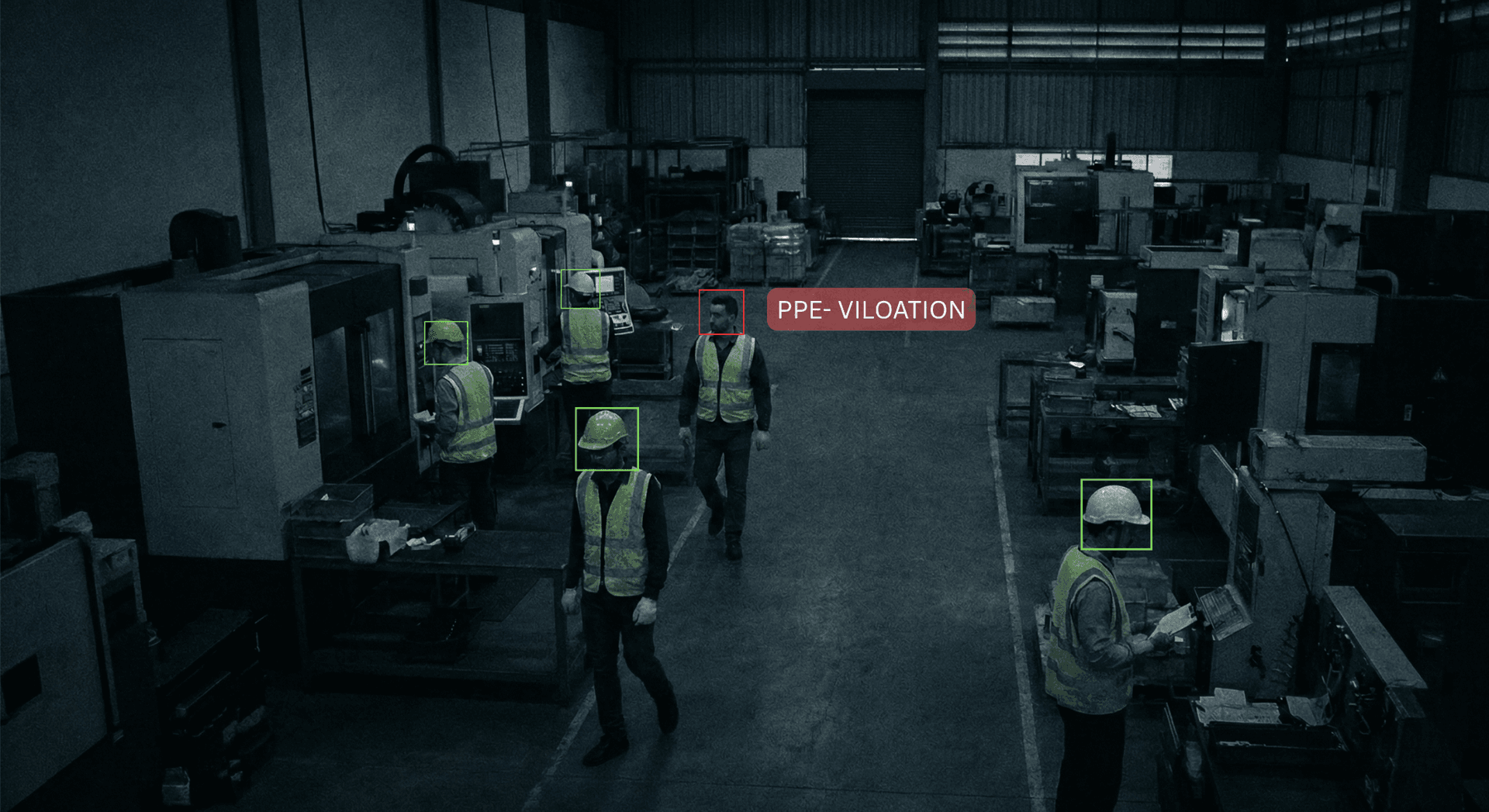
Step-by-step playbook for AI PPE detection inside the Saudi Aramco contractor ecosystem — model selection, IoU thresholds, FRC handling, SAP-PM hooks, and audit-ready evidence trails.
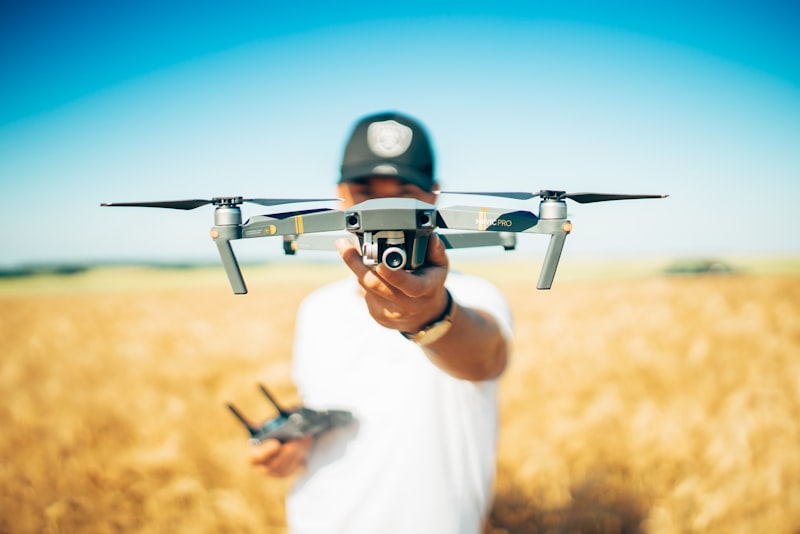
An industrial-policy reading of the 2026 Saudi construction stack: AI vision on every site, drones replacing surveys, BIM as contract-of-record. Includes vendor selection criteria for KSA megaprojects.

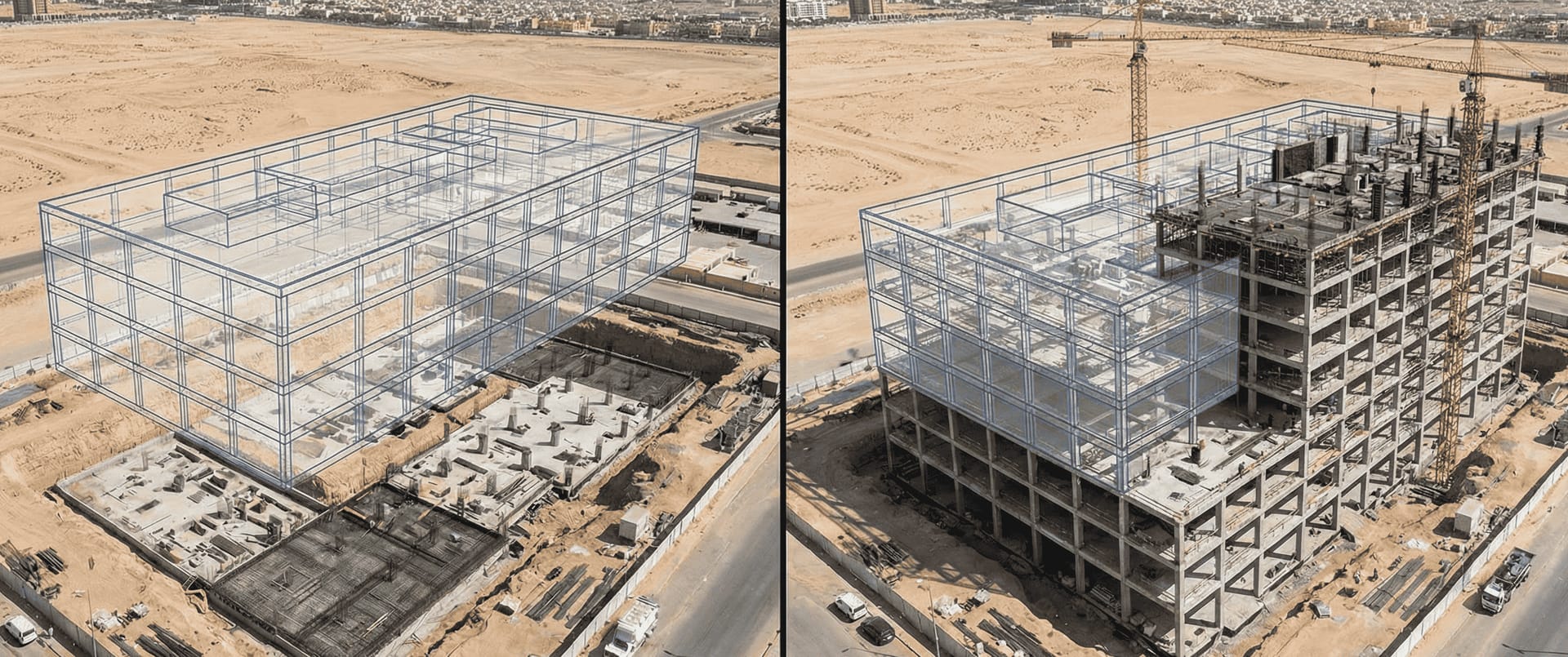
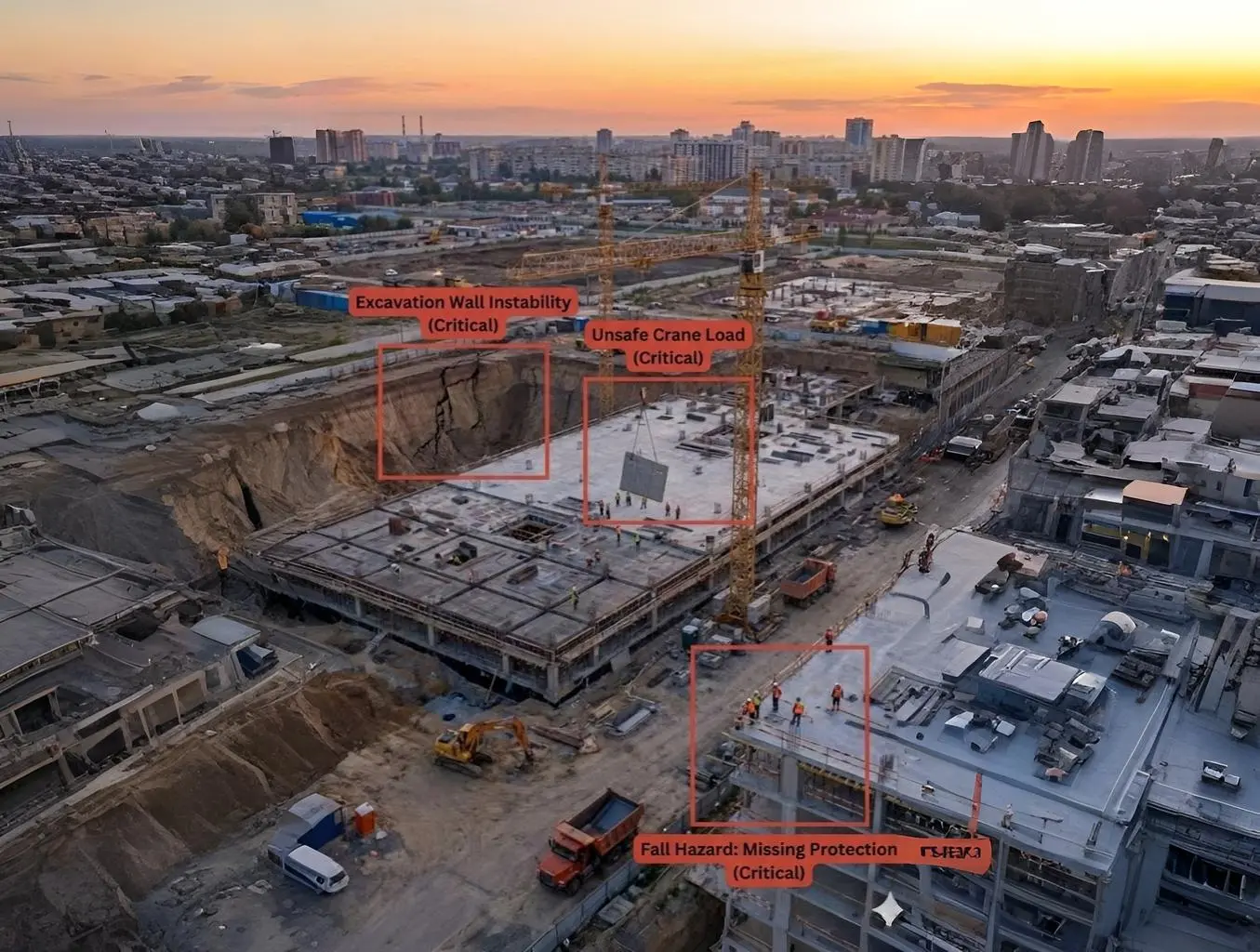
Step-by-step playbook for AI PPE detection inside the Saudi Aramco contractor ecosystem — model selection, IoU thresholds, FRC handling, SAP-PM hooks, and audit-ready evidence trails.
An industrial-policy reading of the 2026 Saudi construction stack: AI vision on every site, drones replacing surveys, BIM as contract-of-record. Includes vendor selection criteria for KSA megaprojects.

From RPAS operator certification to BVLOS approval and no-fly-zone overlays, the practical 2026 path for getting GACA drone permits on a Saudi construction site without delaying mobilisation.
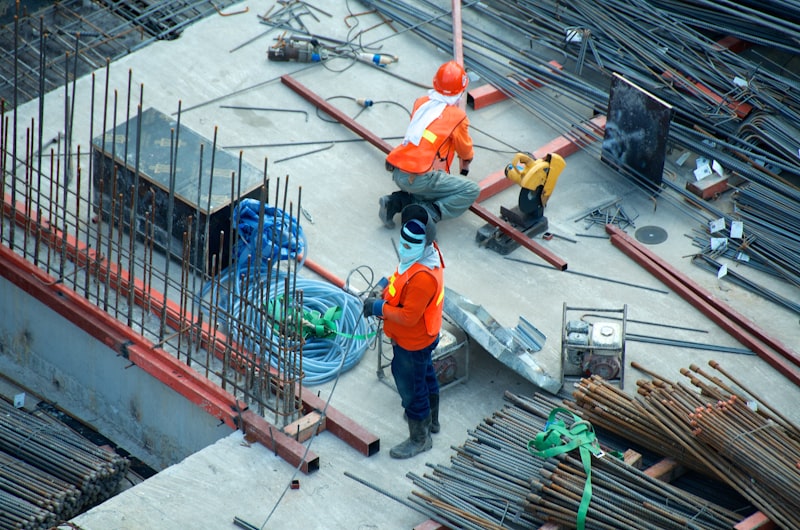
Stop selling construction AI as a feature. Five KPIs — incident reduction, defect-escape rate, schedule slippage, stockpile volumetrics, RFI response time — translate computer vision into language a Saudi CFO will actually approve.
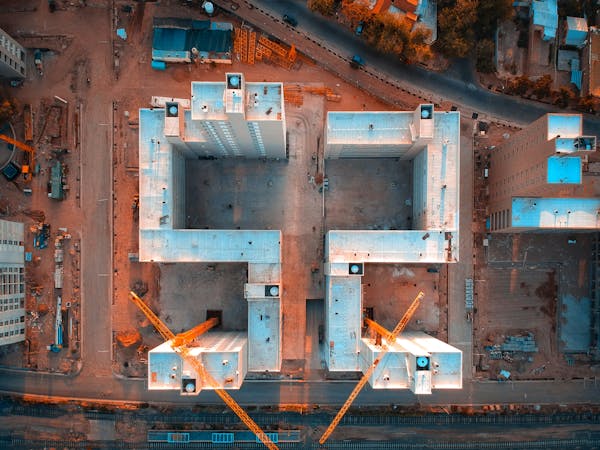
A non-promotional 2026 shortlist of ten AI construction platforms with real KSA traction — what each does well, where they fall short, and how to score them against IKTVA, PDPL data residency, and Vision 2030 mega-project realities.

A practical decision tree for Saudi industrial AI architecture: server-side CCTV vs edge inference. Hailo-8, Jetson Orin Nano/NX, and cloud GPU compared on latency, cost per stream, and PDPL data path.

How AI vision moves the Aramco contractor EHS file from manual logbook to audit-ready, real-time evidence — covering LPS, SAP-PM hand-off, NORM, hot-work permits, and the contractor scorecard.
A field-ready 2026 PDPL compliance checklist for any Saudi enterprise running video analytics — from DPO appointment to lawful basis, transfer rules, right-to-erasure on stored frames, retention windows, and audit trail.

Seven concrete practices for deploying AI construction monitoring on NEOM sites — sandstorm-aware models, edge-first architecture, BIM linkage, GACA permit cycles, and the bandwidth realities of Trojena and The Line.
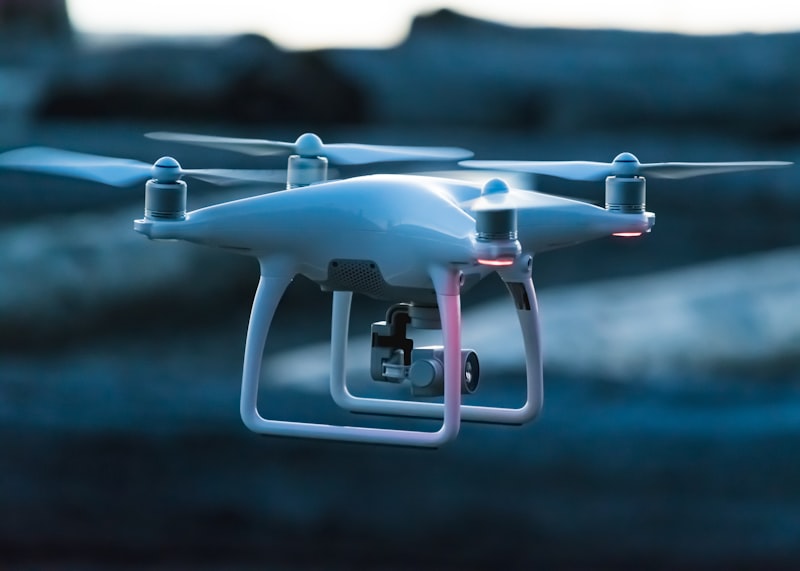
A factual 2026 comparison of three drone site-mapping platforms for Saudi construction — Pix4D, DroneDeploy, and FI Tech — across accuracy, KSA-resident cloud, Arabic UI, GACA workflow, and integration with BIM and SAP.
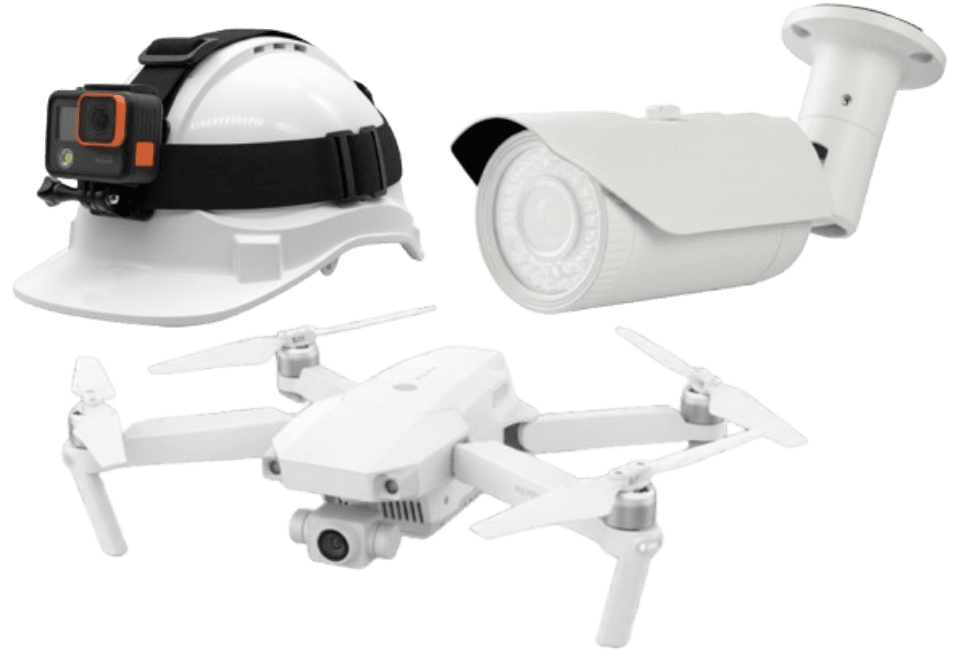
Most Saudi industrial sites have hundreds of working CCTV cameras. Here is how to layer AI vision on top — ONVIF discovery, RTSP gateways, edge inference, and the realistic cost per camera in SAR for a 2026 retrofit.

A 2026 procurement reality check for Saudi enterprises buying AI: how Aramco IKTVA scoring, Saudi-Made certification, and Nitaqat tiers translate into contract terms, and why local vendor choice impacts your supply chain more than the deck implies.

What does drone mapping actually cost in KSA in 2026? A clear SAR-per-hectare breakdown across RTK photogrammetry, lidar and thermal flights, with the GACA permit overhead and the terrain factors that move pricing up or down.
EHS managers are asked to approve AI hard-hat systems on numbers they are not trained to read. This guide translates IoU, precision, recall and mAP into KSA contractor terms — and shows the thresholds that actually matter on Saudi sites.

RFID was the default asset-tracking choice on Saudi construction sites for a decade. In 2026 vision AI catches up on most categories and wins outright on a few — here is the honest comparison and the hybrid pattern that most NEOM and Aramco contractors actually deploy.

Thermal drone inspection of Aramco pipelines in 2026 is no longer a one-off survey — it is a programmed monthly cycle feeding the corrosion register. This playbook walks through sensor choice, GACA BVLOS reality, anomaly thresholds and the integration that makes the data actionable.

Drone-based stockpile volumetric surveys in the Saudi mining sector are now the financial-audit standard. This guide covers Ma'aden-grade methodology, RTK setup, the accuracy bands that survive an external audit, and how to integrate the result into the monthly inventory close.
Five 3D drone progress tracking tools claim to solve BIM-to-reality comparison. Only three actually do. This guide compares Pix4D, DroneDeploy, OpenSpace and FI Tech on accuracy, BIM hand-off, KSA hosting and the integration depth that owners actually demand.
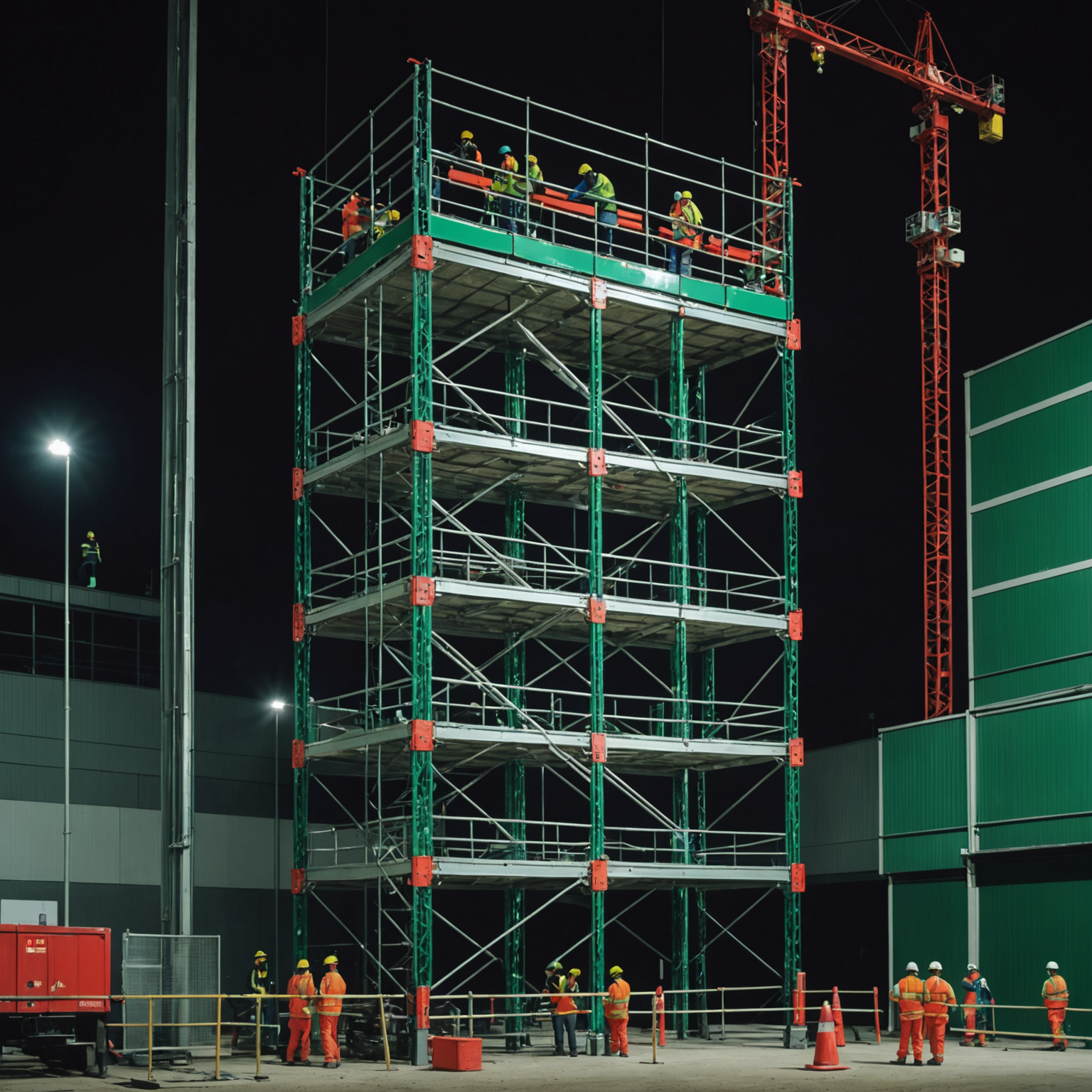
Camera-based fall detection and wearable IMU sensors solve the same problem differently. This guide compares both for Saudi industrial sites — accuracy, latency, false-positive rate, PDPL implications, and why most 2026 deployments end up using both.
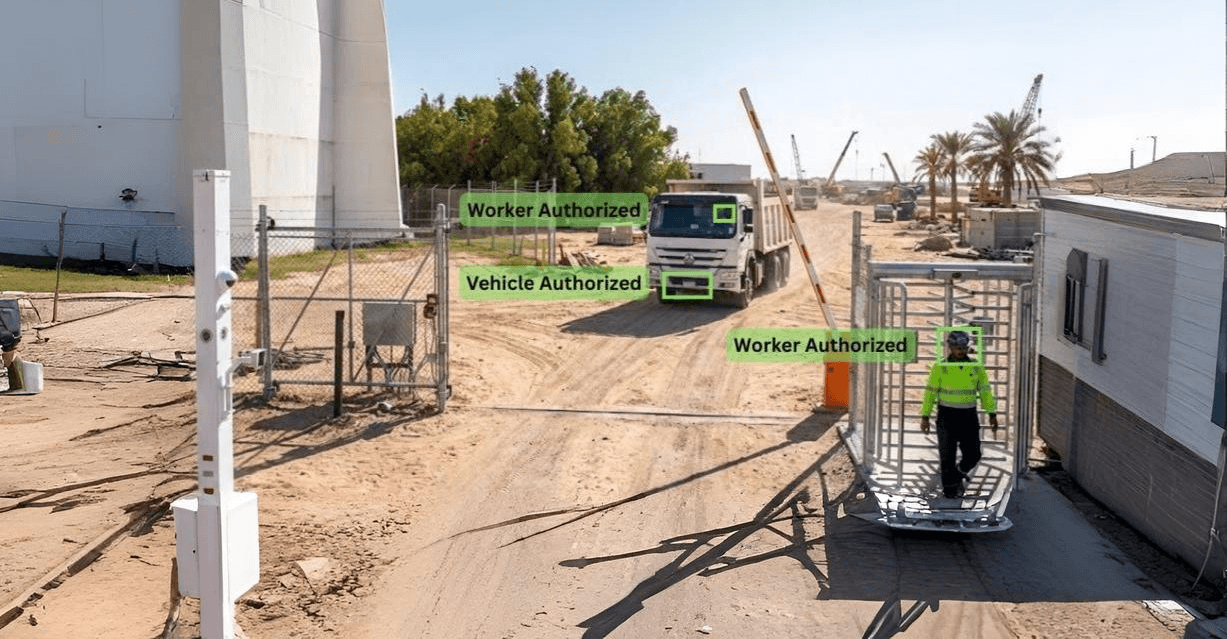
Vehicle-pedestrian incidents are still a leading cause of serious injury in Saudi industrial yards. This guide covers the camera setups, near-miss thresholds and audible warning patterns that actually reduce incidents — backed by real KSA deployment data.
Face recognition under Saudi PDPL is allowed but bounded. This guide translates the law into practical engineering rules — when you need explicit consent, what counts as biometric special-category data, the legitimate-interest test, and the cross-border rules that bite Saudi deployments.
Hand tool theft on Saudi construction sites averaged 6–9% of tool inventory per year before AI vision. Gate-based vision detection now cuts that by up to 80%. This guide covers the model, the gate camera setup, the integration with material registers, and the realistic 2026 SAR ROI.
BVLOS drone operations are now standard practice on Aramco pipelines, NEOM corridors and large mining sites in Saudi Arabia. This guide walks through the GACA permit chain, the safety-case structure, the operating organisation requirements, and the realistic 4–8 week lead time.
A computer vision system that fails the first time PM10 spikes is a science project, not a deployment. This guide covers the augmentation strategies, MTF degradation models, fallback modes and validation sets that make a 2026 KSA system genuinely robust to dust and haze.
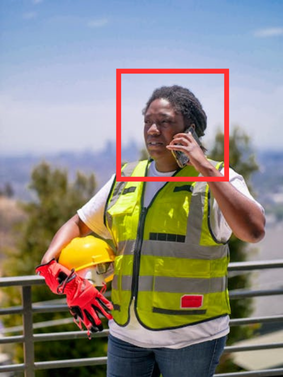
Heat stress kills more KSA construction workers than fall-from-height in some seasons. This guide walks through how vision detects fatigue and heat-stress markers — gait change, posture droop, micro-stops — and the HSE escalation patterns that actually pull a worker out before collapse.
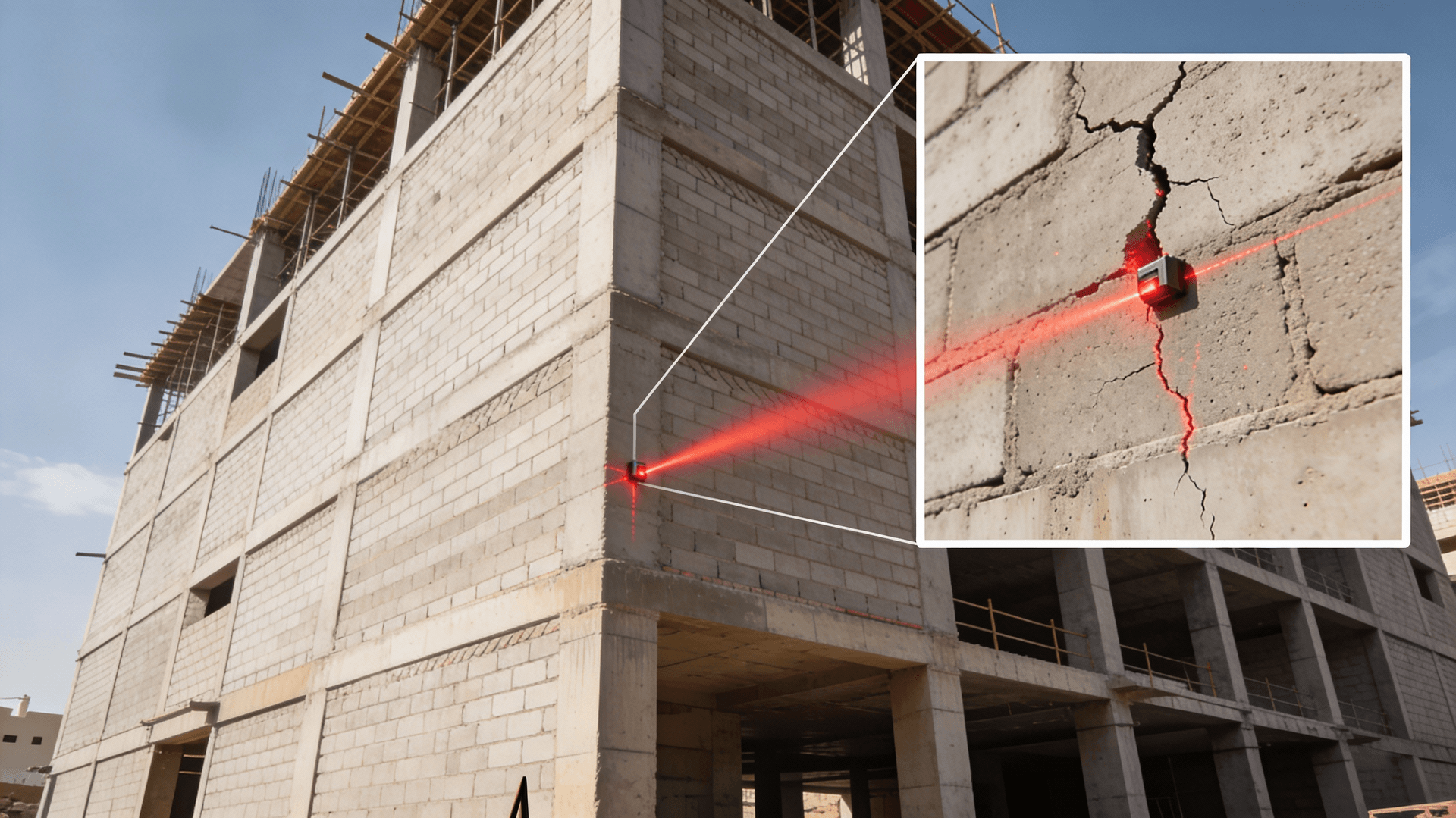
ROI for CCTV AI is widely overstated and just as widely under-modelled. This guide walks through how to build a defensible calculator for your Saudi plant — the variables that matter, realistic SAR pricing inputs, and the sensitivity analysis that survives a procurement review.
Saudi mega-projects span hundreds of kilometres of perimeter. Static fence sensors and patrol crews cannot keep up. This guide covers AI-powered perimeter and intrusion detection for NEOM, Diriyah and Red Sea Global — camera placement, false-positive control, PDPL posture, and the integration with security operations.
Where you run vision inference is now a compliance question, not just an engineering one. This guide walks through the edge-versus-cloud trade-offs for Saudi industrial sites in 2026, the PDPL Article 29 boundaries, the NCA-ECC alignment, and the hybrid patterns that survive an audit.
Discover how leading Saudi construction companies are using drones to monitor megaprojects, reduce delays by 40%, and achieve Vision 2030 goals with unprecedented precision.
AI safety systems detect PPE violations, hazardous conditions, and unsafe behaviors in real-time. Learn how leading contractors achieve zero-incident goals.
Deciding between photogrammetry and LiDAR for your 3D mapping project? Learn the key differences in accuracy, cost, and ideal use cases to choose the right technology for your needs.
Transform your construction sites into living digital twins. See how 3D mapping technology connects physical reality to BIM models for unprecedented project visibility.
NEOM, THE LINE, and Qiddiya represent the future of urban living. Discover the cutting-edge technologies making Saudi Arabia's smart city vision a reality.
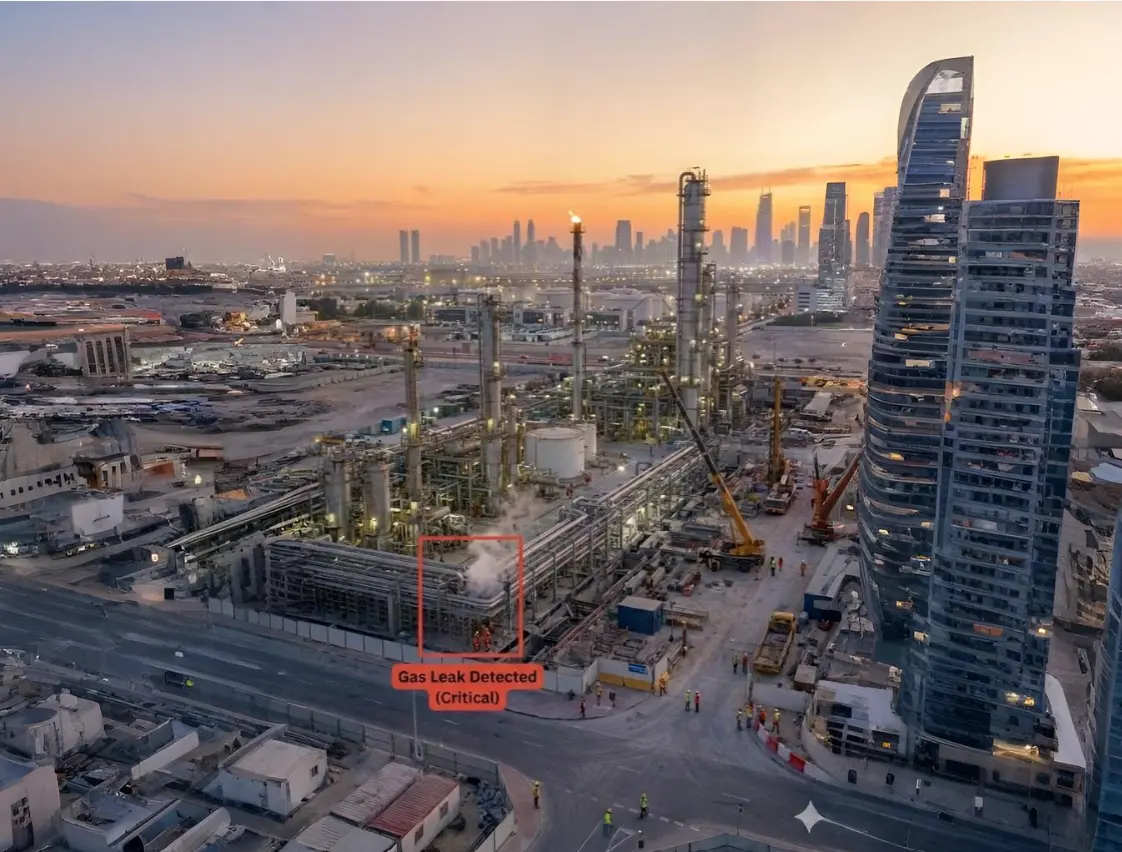
Flare stacks, pipelines, and offshore platforms demand rigorous inspection. See how drones are revolutionizing asset integrity management across MENA oil & gas.
Struggling to justify progress tracking technology investment? This guide provides the data, formulas, and case studies you need to build a compelling business case.