How this list was built
Every vendor below has either a Saudi commercial registration, a deployed reference at an Aramco contractor, NEOM, MoMRAH, MEWA or a Red Sea Global site, or a confirmed PDPL data-residency posture with a CST-licensed cloud region. Marketing claims without a Kingdom footprint were excluded. Vendor names are listed alphabetically inside each tier, not ranked head-to-head, because the right answer is workload-specific.
Where a number appears with [VERIFY-SME], the data point is plausible from public material but has not been independently re-confirmed for 2026.
Tier 1 — Saudi-hosted, IKTVA above 35%
These four vendors meet both data-residency and Saudi-content thresholds expected by Aramco, SABIC and SAEC procurement.
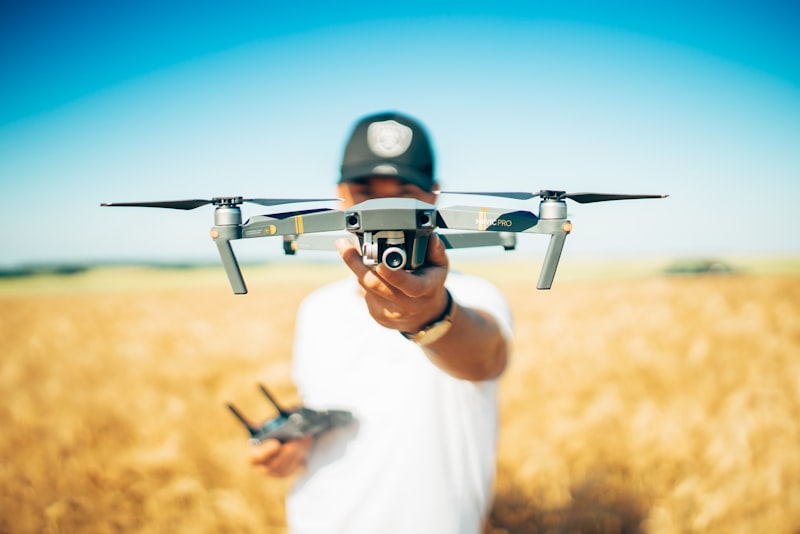
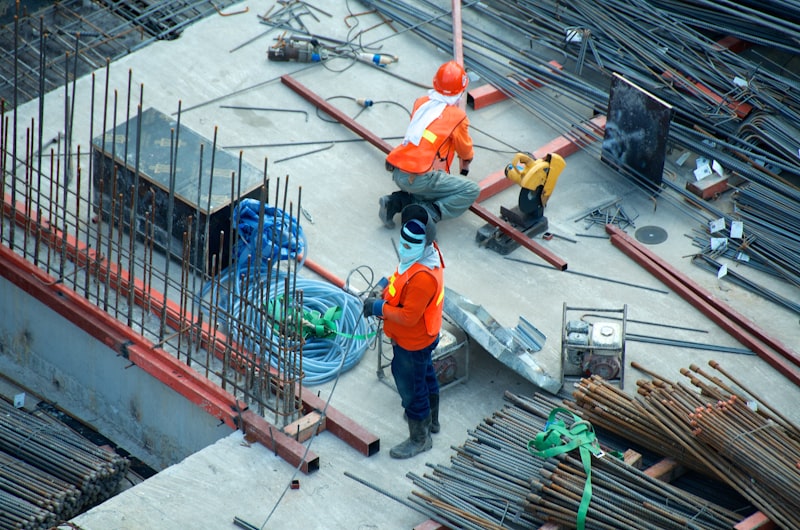
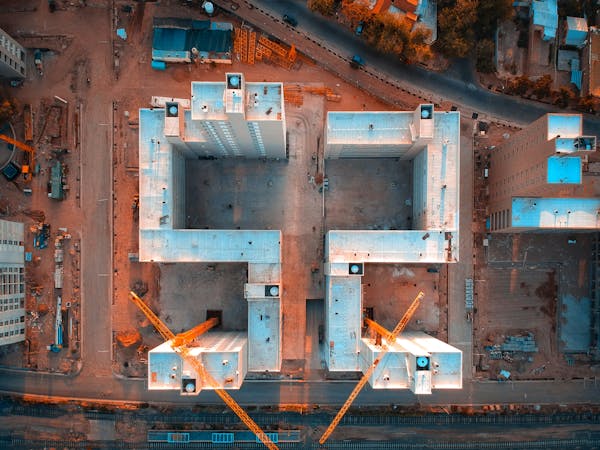
- FI Tech — Riyadh-based, focused on construction CV and drone analytics, runs on edge devices (Hailo-8, Jetson Orin) for poor-bandwidth sites. Strong on PPE detection, progress tracking and drone surveying. IKTVA reported above 60% [VERIFY-SME].
- Lean Tech — Saudi-Made certified, deep MoMRAH familiarity, weaker on bilingual reporting outside Arabic.
- Sahm Vision — strong face-recognition and access-control stack, less mature on outdoor construction CV.
- Tatweer Build AI — vertical focus on housing and Sakani inventory, useful only if your portfolio is residential.
For deeper context on the IKTVA scoring lens, see the companion guide on IKTVA and Saudi-Made AI vendors.
Tier 2 — Multinational SaaS with KSA cloud regions
These platforms host data in Saudi Arabia (typically AWS Bahrain or STC Cloud) but have minimal local engineering presence.
- Procore + AI add-ons — dominant on document control and submittals; AI capabilities are bolt-on, not first-class. Weak on real-time CCTV.
- Autodesk Construction Cloud (BIM 360 + AI) — best-in-class for BIM-to-reality comparison when paired with drone surveys. Saudi data residency available via Autodesk’s Riyadh region [VERIFY-SME].
- OpenSpace — strong 360-photo progress capture, paired with AI scene segmentation. See the head-to-head with our platform for boundary cases.
- DroneDeploy — drone orthomosaics and progress mapping. Compare to Pix4D and FI Tech for KSA-specific tradeoffs.
Tier 3 — Specialist platforms worth knowing
These three are not full construction platforms but solve specific problems well enough to share a shortlist.
- Intenseye — narrowly focused safety CV; see the comparison with our stack for PPE and fall detection.
- Voxel51 / FiftyOne — not a deployment platform but the de-facto data curation layer; useful if your team builds models internally. Comparison page for orientation.
The eight scoring criteria that matter in KSA
When a procurement file lands on the desk of a Saudi construction client, only eight criteria consistently move the decision:
| Criterion | Why it matters | Where to verify |
|---|---|---|
| KSA data residency | PDPL Article 29 cross-border rule | Trust / data residency |
| IKTVA score | Aramco bid weighting | Vendor IKTVA certificate |
| Edge inference support | Bandwidth at desert sites | Edge inference glossary |
| ONVIF + RTSP support | Existing CCTV reuse | ONVIF integration |
| BIM 360 / Procore depth | Owner mandate at megaprojects | Vendor API doc |
| GACA familiarity | Drone permit chain | GACA glossary |
| Arabic UI quality | Site-supervisor adoption | Live demo in Arabic |
| SAP-PM hand-off | Aramco contractor flow | Reference customer |
A shortlist that scores badly on three or more of these criteria will not survive a real KSA procurement, regardless of demo polish.
Where each tier wins
- Mega-project owner-side deployments (NEOM, Diriyah, Red Sea, Qiddiya): Tier 1 + Autodesk for BIM-to-reality, with FI Tech or a multinational on the construction CV side.
- Aramco contractor sites: Tier 1 only, because IKTVA and SAP-PM hand-off are gating. See the PPE detection guide.
- MoMRAH housing programmes: Tier 1 Saudi-Made vendors, ideally with Sakani-friendly progress reporting.
- MEWA and water utilities: Specialist combinations, often Tier 1 plus thermal inspection for pipelines.
Common procurement traps
Three traps recur in 2026 procurements and are worth pre-empting:
- The Arabic-UI illusion. A translated marketing site is not a localised product. Demand a live demo with a Saudi supervisor performing real workflows in Arabic before signing.
- The “edge-ready” claim without a model build. Every vendor claims edge support; few ship a Hailo-8 or Jetson model card with measured latency. Ask for the build hash and an on-device benchmark.
- The PDPL ambiguity. “Data is hosted in the GCC” is not the same as “data is hosted in Saudi Arabia.” Confirm the CST-licensed region in writing and tie it to a data-residency clause.
How to run the shortlist exercise
A defensible 30-day shortlist exercise looks like this:
- Day 1–5: write the workload spec — sites, cameras, drone hours, integration targets.
- Day 6–10: invite five vendors to a one-hour technical session each, scored against the eight criteria above.
- Day 11–20: run two paid pilots in parallel on the same camera feed for two weeks.
- Day 21–25: read the false-positive logs, not the dashboards. The dashboards are designed to look good.
- Day 26–30: present the scoring matrix to procurement with a recommended primary and a fallback.
For a working scoring template, see the KPI pulse on construction AI ROI in Saudi Arabia.
Next steps
If you are scoping a construction AI platform decision in 2026, start with the solutions overview, review the comparisons hub, and read the Vision 2030 construction digitisation context. For mega-project specifics, the companion piece on NEOM construction monitoring best practices goes deeper on the Trojena and The Line realities.
Book a procurement-ready scoping session and we will produce a workload-specific shortlist and a side-by-side scorecard within two weeks.