What “fall detection” actually means
Two distinct events get conflated in vendor marketing:
- Slip / trip / fall on level ground — the most common workplace injury, but not the most severe.
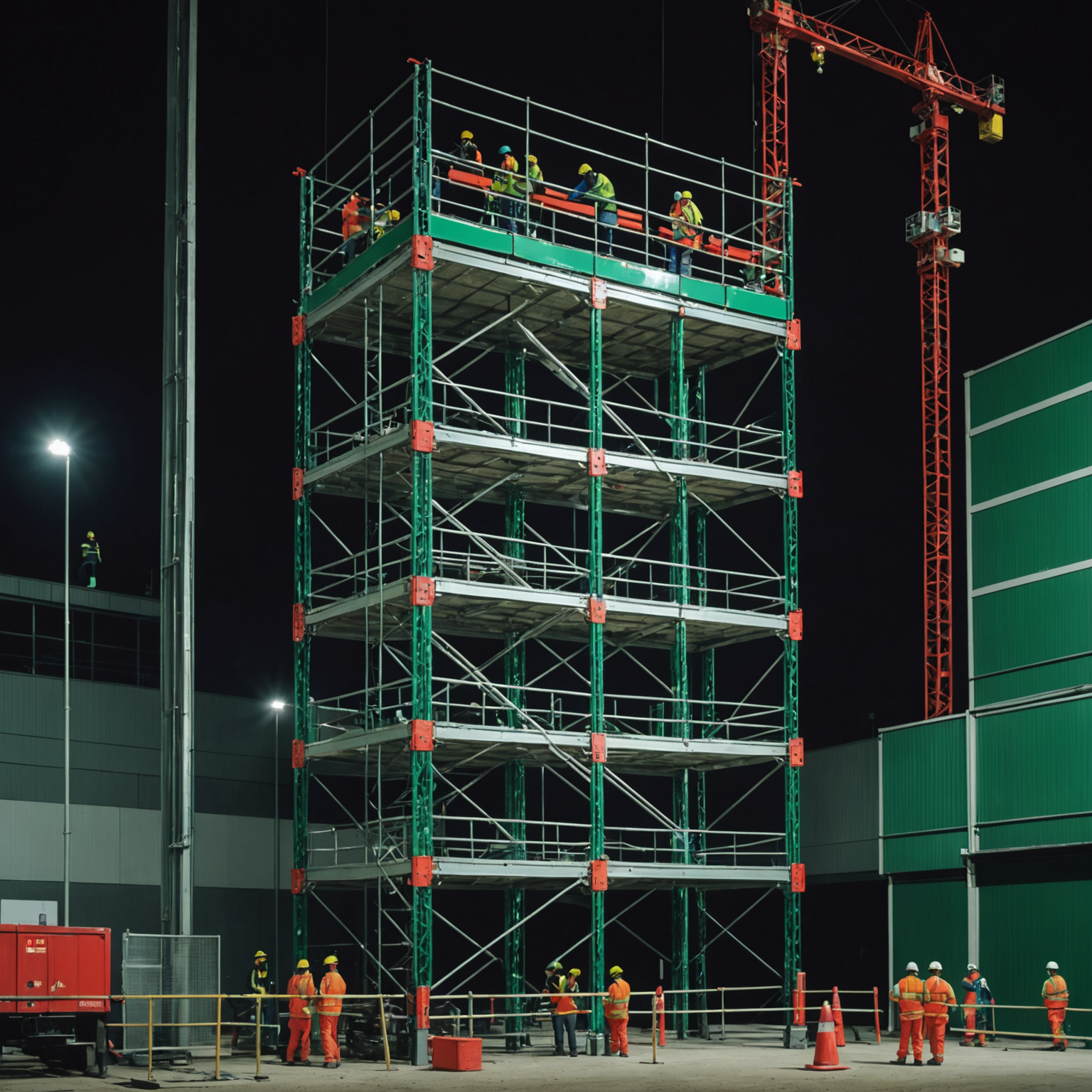
- Fall from height — far rarer but disproportionately fatal. Mandatory reporting in KSA construction.
A 2026 system should distinguish the two and route them to different alert priorities. See the fall detection solution and the slip-trip-fall glossary for the underlying definitions.
Camera-based fall detection — strengths
Strengths of vision-based fall detection on KSA sites:
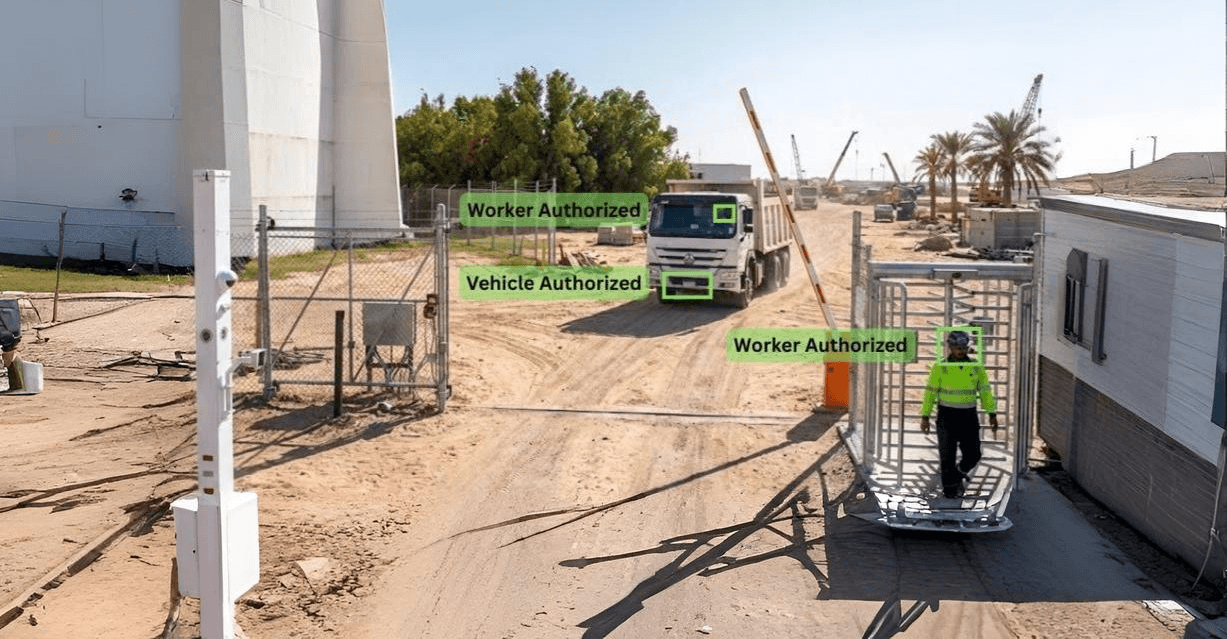
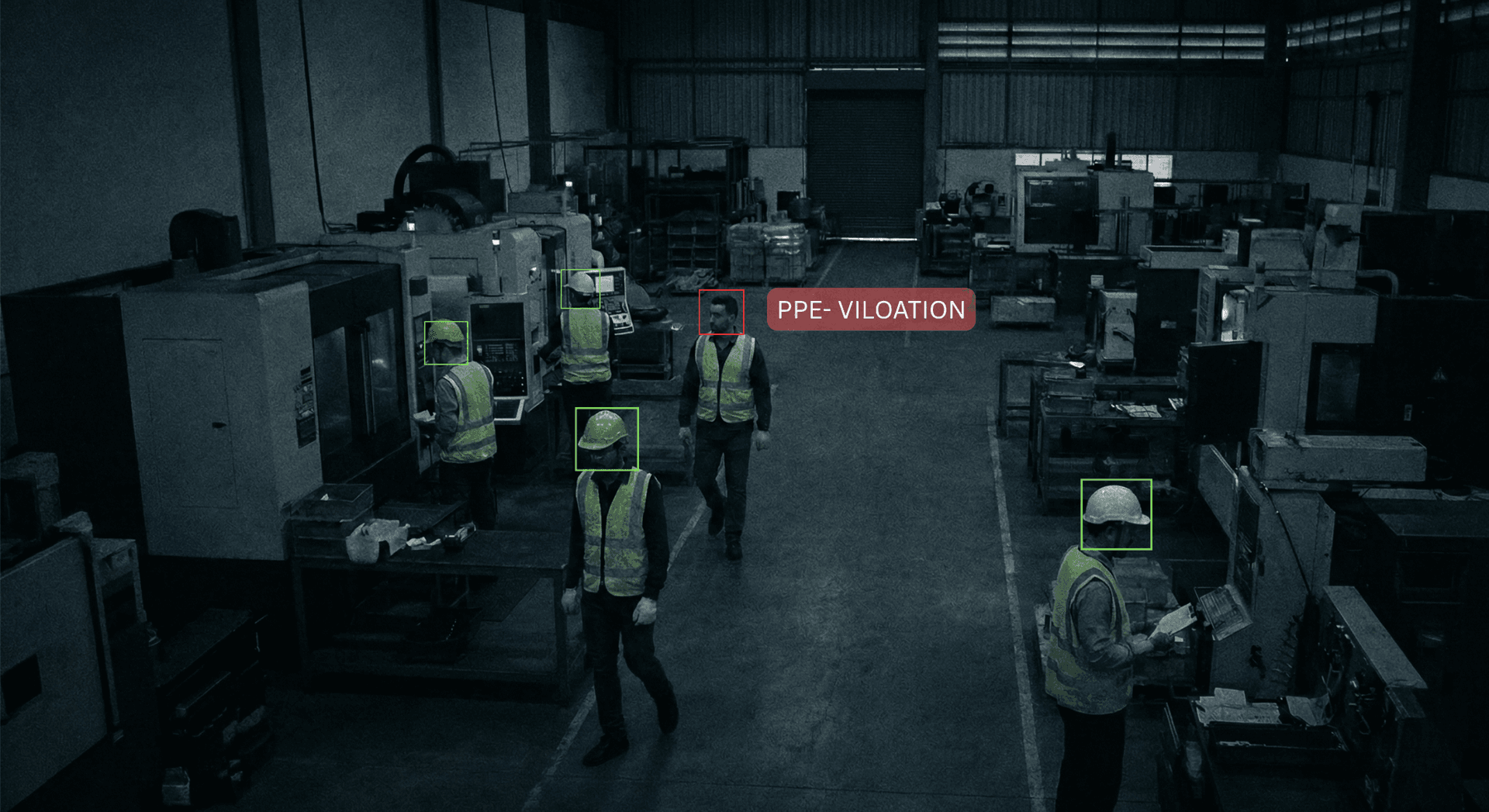
- Site-wide coverage. A 200-camera site detects falls anywhere a camera sees, with no per-worker hardware.
- Behavioural context. Cameras capture what the worker was doing before, during and after — invaluable for incident investigation.
- Retrofit cost. The CCTV AI retrofit guide shows how to add fall detection to existing cameras for SAR 1,200–3,500 per camera per year.
- Multi-purpose installs. The same camera also covers PPE detection, vehicle-pedestrian safety and intrusion detection.
Typical 2026 performance on KSA construction footage:
- Latency: 1.5–3.5 seconds from event to alert.
- Precision: 0.85–0.92 at the operating threshold.
- Recall: 0.78–0.88 [VERIFY-SME].
Camera-based fall detection — weaknesses
- Indoor and low-light. Without IR or thermal augmentation, performance degrades.
- Lone-worker scenarios. A worker inside a tank or duct is invisible to fixed cameras.
- Privacy posture. Continuous behavioural monitoring requires a PDPL lawful basis register — see the PDPL compliance checklist.
- Self-recovery occlusion. A worker who falls and is partially occluded by equipment may not be detected.
Wearable IMU fall detection — strengths
Strengths of wearable IMU bands and helmet-attached units:
- Indoor and confined-space coverage. The sensor goes where the worker goes.
- Direct biomechanical signal. Acceleration spikes and orientation drops are unambiguous.
- Low latency. 200–800 ms from event to alert.
- Lone-worker survival. The wearable can also serve as an SOS button.
Wearable IMU fall detection — weaknesses
- Per-worker cost. SAR 200–800 per band per year, plus charging and battery management.
- Behavioural blind spot. The wearable knows the worker fell, not why or where.
- Compliance friction. Workers must wear the band; non-compliance is a constant management overhead.
- Calibration drift. IMU sensors drift over time and need quarterly re-calibration.
Side-by-side comparison
| Dimension | Camera | Wearable IMU |
|---|---|---|
| Coverage | Site-wide where cameras see | Per-worker |
| Indoor/confined | Limited | Strong |
| Lone-worker | Limited | Strong |
| Latency | 1.5–3.5 s | 0.2–0.8 s |
| Cost (Year 1) | SAR 1,200–3,500 per camera | SAR 200–800 per worker |
| Behavioural context | Yes | No |
| PDPL footprint | Higher | Lower |
| Multi-purpose | Yes | No |
The cost numbers above match the CCTV AI retrofit guide and 2026 KSA wearable pricing [VERIFY-SME].
The hybrid pattern that wins
A 2026 best-practice deployment on a Saudi industrial site:
- Cameras for site-wide coverage of outdoor and well-lit indoor areas.
- Wearable IMU for confined-space, lone-worker, and after-hours tasks.
- Common alerting layer unifying both feeds — see the AI analytics platform.
- VMS-anchored events so that supervisors see one feed in Hikvision, Genetec or Milestone.
The hybrid pattern is not double-counting. It is solving two distinct coverage problems with the right tool for each.
Calibration — what auditors expect
For an HSE audit-ready deployment:
- Validation set — at least 200 staged falls captured on the actual site cameras and wearables, used to compute precision/recall at the operating threshold.
- Drift register — weekly precision tracked against the held-out validation set.
- Suppression rules — controlled environments (rest areas, prayer rooms) where false positives are common are zone-suppressed.
- Permit awareness — work-at-height permits raise sensitivity; non-permit zones run lower.
For more on calibration anchor with the hard-hat detection accuracy piece.
Common 2024–2026 mistakes
- Choosing one technology for political reasons — usually the answer is both.
- Skipping the staged-fall validation set — the system has no defensible accuracy without it.
- Ignoring the alert routing path — a fall alert that reaches the supervisor 5 minutes late is operationally useless.
- No DPO sign-off for camera-based behavioural data.
Next steps
If you are scoping fall detection on a Saudi industrial site, start with the fall detection solution, the AI fall detection vs manual safety patrol answer and the work-at-height solution. Cross-reference the Aramco EHS compliance guide for the SAP-PM hand-off.
Book a fall-detection scoping call and we will produce a hybrid camera + wearable plan within 10 working days.